Each facility manager will ultimately come to a vexing crossroads. Do you repair your aging system one more time, or do you finally replace it? In commercial life safety technology, getting the wrong answer can lead to catastrophic results.
Knowing when a panel is genuinely past its prime keeps your occupants safe and protects your operational bottom line. Property owners can go here to reference specific regional code baselines before budgeting for major equipment updates. Let us look at the definitive signs that your building requires an entirely fresh setup.
1. Chronic False Alarms Sapping Business Productivity
Sometimes an unnecessary alarm will sound, but when your facility begins evacuating multiple times per month without cause, it’s indicative of a structural problem within your facility. With older smoke alarms and faulty wiring losing calibration within their environments, they can often confuse normal dust and changes in humidity with a developing fire.
This poses a serious “crying wolf” situation in which employees will be indifferent to real dangers. What’s more, many local fire departments assess heavy fines for unnecessary evacuations.
2. The Hunt for Replacement Parts Feels Like Archeology
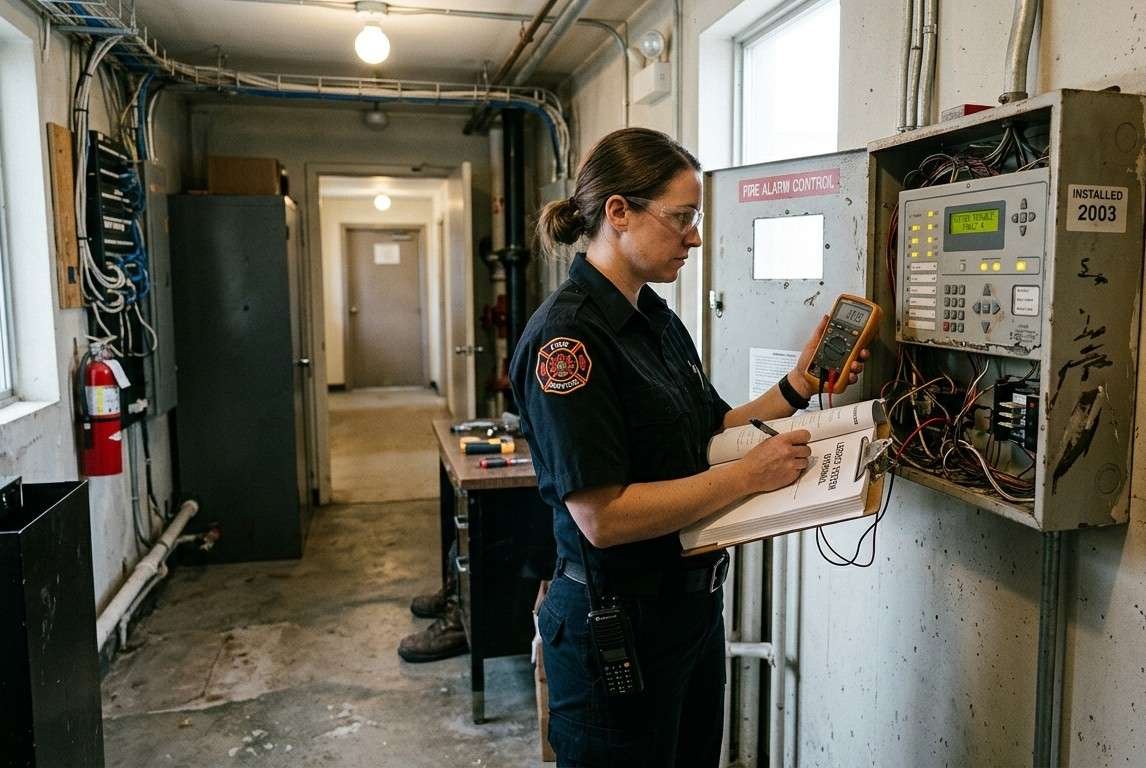
If your certified fire technician informs you that replacement initiating devices or main loop cards must be sourced from secondary auction websites, your system is obsolete.
Most fire protection manufacturers cease the manufacturing of certain products around every ten to fifteen years, thereby ceasing the supply of factory remanufactured components.
- Increased Downtime: Leaving your building exposed and waiting weeks for a remanufactured component.
- Cost Inflation: Scarce components command premium prices that defy logical repair math.
- Compliance Liabilities: Using unapproved or non-UL-listed parts can instantly void your building insurance coverage.
3. Your System Predates Major Building Remodels
Commercial spaces evolve constantly. If your industrial warehouse was recently partitioned into retail offices, or your school added a new science wing, an old conventional panel cannot keep up.
Legacy loops lack the zone capacity to map out altered architectural footprints cleanly.
Trying to force modern, addressable notification appliances onto an outdated, low-voltage copper infrastructure usually results in constant ground faults and communication glitches.
4. Total Incompatibility with Modern Building Controls
A modern safety strategy requires systems to talk to each other seamlessly. If a small fire breaks out, the main panel should automatically recall elevators, trigger magnetic door releases, and signal the HVAC dampers to choke off smoke travel.
Older systems lack the smart relays and open communication protocols required to interface with contemporary building management networks, leaving your facility operating in dangerous technological silos.
- HVAC Isolation: Modern systems cut off air circulation to prevent feeding oxygen to a fire.
- Access Integration: Smart panels unlock access control turnstiles immediately during emergencies.
- Elevator Containment: Automated communication prevents elevators from opening onto a compromised floor.
5. Accumulating Financial Proof That Repairs Outpace Replacement
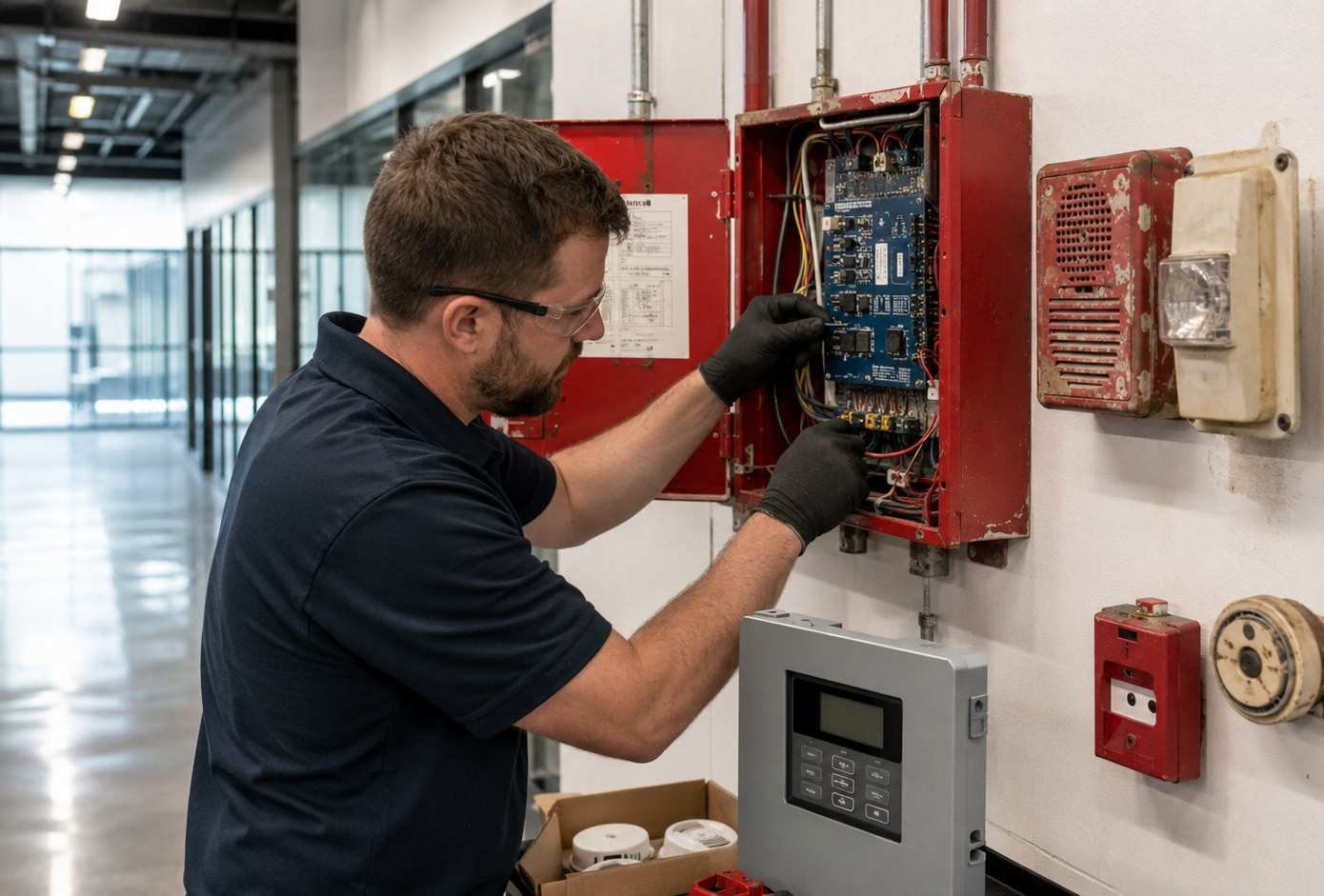
Take a close look at your facilities maintenance ledger from the past twenty-four months. The total of expenses related to addressing the irregularity of power supply sources, strobe lights failures, and the need for emergency diagnostic call-outs should not be more than forty percent of a brand new installation quote.
Spending money on an obsolete system, even one that may last until the end of the year, does not benefit the company in any way.
Frequently Asked Questions
1. How long does a commercial fire alarm panel normally last in its life expectancy?
Commercial panels are normally designed to work well for around twelve to fifteen years before components begin to fail more than is acceptable, and parts are discontinued.
2. Does an older system work on an annual NFPA inspection?
A system may be old and technically functioning; however, if it cannot hold a charge in a backup battery or cannot activate secondary notifications within the time that is defined in the code, it will fail.
3. Will I be able to update my system in stages to share the cost?
Yes. Many facilities upgrade their central control panels first, using adaptive bridging modules, allowing them to keep existing field devices active temporarily while gradually updating sensors over time.
Transitioning to Modern Life Safety Systems
The ongoing repairs of an outdated life safety system will subject you to massive oversight from the relevant authorities and create numerous liabilities. Having an updated system will not only help you comply with local regulations but will also make sure that your data is consolidated into one place, thus reducing your costs in the future.
When you plan to install such systems, you must consult an expert beforehand to get all necessary changes made to your fire alarm upgrade design. Just as people carefully choose the best electronics for home to improve safety, convenience, and long-term performance, businesses should also invest in reliable life safety upgrades. This way, your company will be protected structurally and technologically for the coming years.